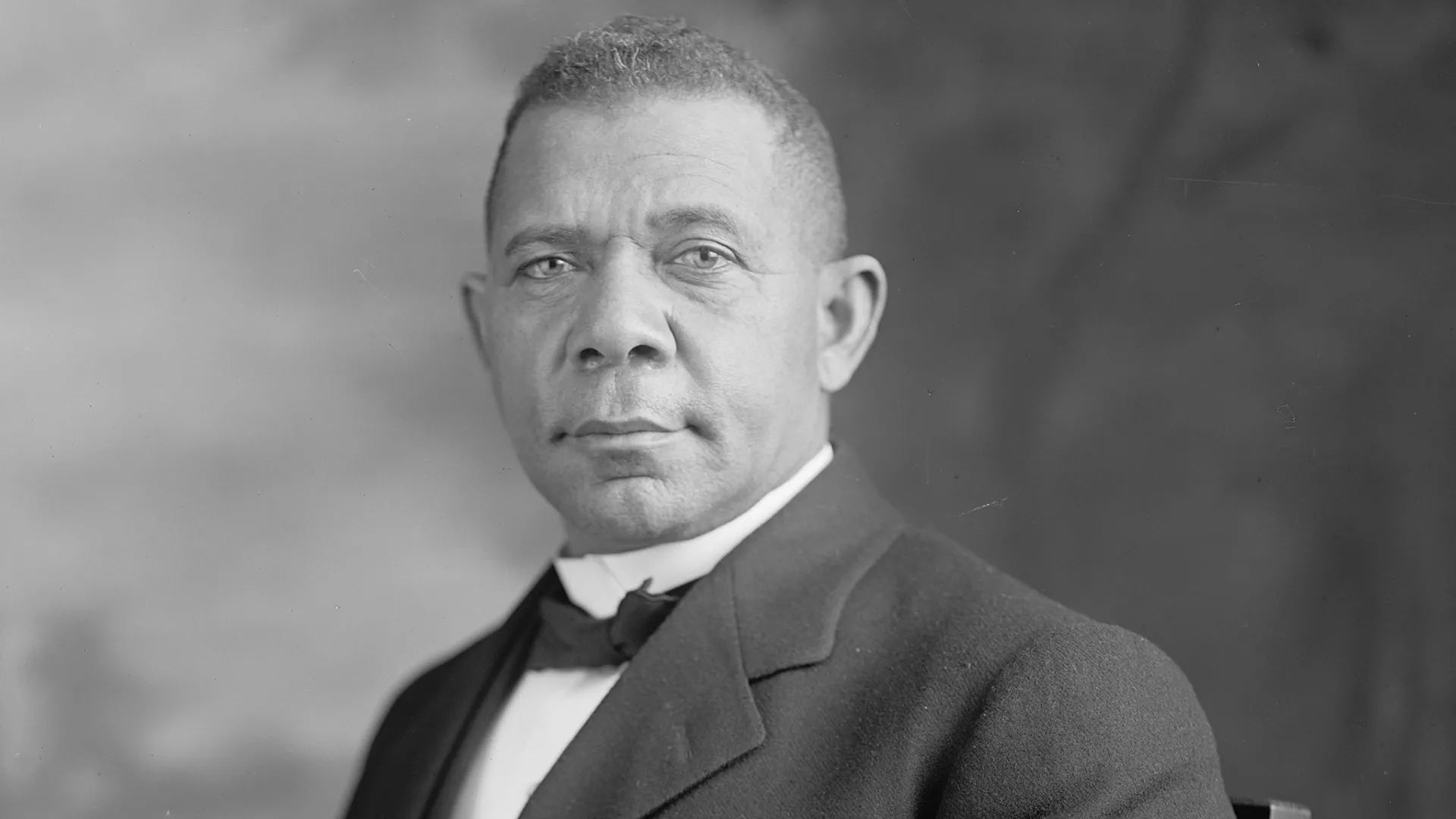
As an American educator, writer, and speaker who lived from April 5, 1856, to November 14, 1915, Booker T. Washington’s Christian values of diligence, independence, and devotion to others permeated every aspect of his life. Washington was the leading figure in the African-American community and the modern Black elite from 1890 and 1915.
Washington, who was born into slavery in Hale’s Ford, Virginia, on April 5, 1856, was set free when American forces arrived in the region during the Civil War. Booker Washington went to Wayland Seminary for college after working his way through Hampton Normal and Agricultural Institute as a young man.
He was appointed as the first director of the newly established Tuskegee Institute, a black higher education institution in Alabama, in 1881. He enlarged the college and recruited students to work on building projects. Work at the college was deemed vital to students’ greater education. His 1895 Atlanta Address, which caught the interest of politicians and the general public, brought him national recognition. Washington was a prominent figure in black politics, garnering widespread support from both more liberal whites and the black population in the South. Washington wrote his autobiography, Up from Slavery, in 1901, which became a famous text. Booker T. Washington’s Christian values, which influenced both his personal behavior and his vision for Black growth, were fundamental to his extraordinary ascent from slavery to national leadership.
He had dinner with Theodore Roosevelt at the White House that year, marking the first instance of a Black person meeting the president in public on an equal footing. On November 14, 1915, he passed away in Tuskegee, Alabama, following an illness.
Booker Washington was one of the founders of the National Negro Business League and a major supporter of African-American companies. In order to strengthen the community’s economy and sense of pride by emphasizing self-help and education, Washington organized a statewide coalition of middle-class blacks, religious leaders, and white politicians and philanthropists. Presidents and other influential people in the US at the time listened to Washington.
He employed the American political system of the nineteenth century to control the media, generate cash, devise a plan, network, disburse money, and reward a group of followers. The period of his activities, from 1880 to 1915, has been dubbed the Age of Booker T. Washington due to his significant leadership. Rather than directly opposing Jim Crow segregation and Black voting disenfranchisement in the South, Washington advocated for Black advancement through entrepreneurship and education. In addition, he backed racial uplift while covertly endorsing court challenges to voter registration restrictions and segregation. Disagreeing with him, black activists in the North, led by W. E. B. Du Bois, decided to establish the NAACP in order to pursue political reform.
Despite his statements that his long-term goal was to abolish the disenfranchisement of African Americans, the vast majority of whom still lived in the South, he faced harsh criticism after his death in 1915 for supporting white supremacy. The civil rights movement of the 1950s, which was founded on new grassroots organizations in the South, adopted a more active and progressive stance decades after Washington’s death in 1915. The civil rights community has disagreed about Washington’s legacy. However, historians and academics began to view him more favorably in the late 20th century due to more complex interpretations of his deeds.
Early Life
Jane, an African-American slave on James Burroughs’ estate in southwest Virginia, close to Hale’s Ford in Franklin County, gave birth to Booker. Although it was discovered after his death that he was born on April 5, 1856, he never knew the day, month, or year of his birth. He also never met his father, who was reportedly a white man who lived on a nearby plantation. In Washington’s life, the man had no emotional or financial influence.
As was customary at the time, Booker Washington was simply referred to as “Booker” from an early age, without a middle name or last name. The demands of slavery were difficult for his mother, her family, and his siblings. Later on, he wrote:
I cannot remember a single instance during my childhood or early boyhood when our entire family sat down to the table together, and God’s blessing was asked, and the family ate a meal in a civilized manner. On the plantation in Virginia, and even later, meals were gotten to the children very much as dumb animals get theirs. It was a piece of bread here and a scrap of meat there. It was a cup of milk at one time and some potatoes at another.
When Booker was nine years old, U.S. troops seized Virginia, and he and his family were granted freedom under the Emancipation Proclamation. The official day of their freedom in early 1865 excited Booker:
As the great day drew nearer, there was more singing in the slave quarters than usual. It was bolder, had more ring, and lasted later into the night. Most of the verses of the plantation songs had some reference to freedom…. [S]ome man who seemed to be a stranger (a United States officer, I presume) made a little speech and then read a rather long paper—the Emancipation Proclamation, I think. After the reading we were told that we were all free, and could go when and where we pleased. My mother, who was standing by my side, leaned over and kissed her children, while tears of joy ran down her cheeks. She explained to us what it all meant, that this was the day for which she had been so long praying, but fearing that she would never live to see.
The first seeds of Booker T. Washington’s Christian values, which would later define his entire concept of education and character development, were sown by his mother’s heartfelt prayer answered on Freedom Day. Following her freedom, Jane moved her family to the free state of West Virginia to live with her husband, Washington Ferguson, who had fled slavery during the conflict. Booker, an uneducated youngster, started laboriously teaching himself to read and went to school for the first time.
Booker Washington was asked for his last name at school in order to register. He decided on the Washington family name. Even later, he discovered that his mother had given him the name “Booker Taliaferro” when he was born, but the master had not used his second name. Washington instantly took back his old name after discovering it, and for the remainder of his life, he was known as Booker Taliaferro Washington.
Black Education Pioneers
For a number of years, Booker Washington earned money by working in coal mines and salt furnaces in West Virginia. He traveled east at the age of sixteen, mostly on foot, to Hampton Institute, a school founded in Virginia to educate freedmen and their descendants. There, he worked as a janitor to pay for his education. Washington had very little money when he first arrived at the university, and his entrance exam was to clean a room. Washington briefly returned to West Virginia after graduating from Hampton at the age of 19. Later, in 1878, he went to Wayland Seminary in Washington, D.C.
In 1881, Washington, then 25 years old, was suggested by Samuel C. Armstrong, president of the Hampton Institute, to take the helm of the new normal school (teachers’ college) in Alabama, Tuskegee Normal and Industrial Institute (later Tuskegee Institute, now Tuskegee University). On July 4, 1881, the new school opened in a room that Butler Chapel A.M.E. Zion Church had donated.
Booker Washington bought a former plantation the following year to be used as the campus’ permanent location. His students actually built their own school by making bricks, constructing classrooms, barns, and sheds, as well as growing their own crops and raising cattle for both educational purposes and to meet most of their basic needs. These activities were based on the Booker T. Washington Christian values of dignity through labor and communal responsibility. In addition to academics, both men and women had to acquire trades. All of the exercises were utilized by the Tuskegee faculty to teach the students fundamental skills that they could return to their predominantly rural black communities across the South. The primary objective was to train farmers and tradespeople to teach in the new lower schools and colleges for Black students throughout the South, rather than to produce farmers and tradespeople themselves. Over the years, the institution grew, adding departments and programs to become what it is today—Tuskegee University.
He and his family had “a large comfortable home,” The Oaks, constructed on campus. In 1900, they moved into the house. Up until his passing in 1915, Booker T. Washington resided there. Margaret, his widow, resided at The Oaks until her passing in 1925.
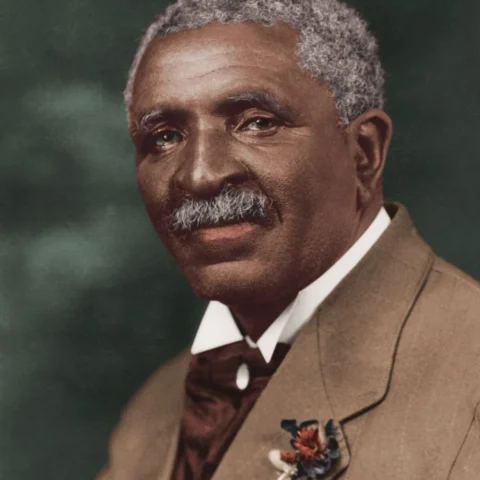
After reviewing George Washington Carver’s research on the illness affecting the soybean crop in 1896, Washington asked Carver to lead the Agriculture Department at Tuskegee, where they grew close. Later, in 1940, commemorative stamps bearing Carver’s signature were released in Washington’s honor.
Marriages and Children
Booker Washington had three marriages. He acknowledged the services of all three of his wives at Tuskegee in his book, Up from Slavery. Fannie N. Smith, his first wife, was from Malden, West Virginia, the same village in the Kanawha River Valley where Washington had resided from the age of nine to sixteen. Smith was a pupil of his when he taught in Malden, and he had connections there throughout his life. He assisted her in becoming admitted to the Hampton Institute. A year after Smith was appointed principal, in the summer of 1882, Washington and Smith tied the knot. Portia M. Washington, their only child, was born in 1883. In May of 1884, Fannie passed away.
The widower Booker Washington remarried Olivia A. Davidson (1854–1889) in 1885. She migrated with her family to the free state of Ohio, where she attended common schools, after being born free in Virginia to a free lady of color and a father who had been set free from slavery. After attending Hampton Institute, Davidson moved to the north to attend the Massachusetts State Normal School in Framingham. Before moving to Tuskegee, she worked as a teacher in Mississippi and Tennessee. Davidson was brought to Tuskegee by Washington, who also elevated her to the position of vice-principal. Before she passed away in 1889, they had two boys, Ernest Davidson Washington and Booker T. Washington Jr.
He wed Margaret James Murray in 1893. She attended Fisk University, a historically black university, and was from Mississippi. She assisted in raising Washington’s three children, but they did not have children together. Murray passed away in 1925, outliving Washington.
Politics and the Atlanta Compromise
Whites and African Americans alike saw Washington’s 1895 Atlanta Exhibition speech as a “revolutionary moment” in the nation. W. E. B. Du Bois backed him at the time, but their relationship deteriorated when Du Bois pursued additional measures to address disenfranchisement and enhance educational possibilities for African Americans. Following their disagreement, Du Bois and his allies called Washington’s speech the “Atlanta Compromise” to convey their disapproval of Washington’s over-accommodation of white interests.
He advocated a “go slow” approach to avoid a serious white backlash, which was based on the Booker T. Washington Christian virtues of patience, pragmatism, and nonviolent tenacity. He has come under fire for pushing many young people in the South to forgo higher education, civil rights, and the possibility of political power. According to Washington, African Americans ought to “concentrate all their energies on industrial education, and accumulation of wealth, and the conciliation of the South.” Since the majority of African Americans at the time resided in the South, which was primarily rural and agricultural, he prioritized “industrial” education since it gave them the necessary skills for the employment that were then available to them. He believed that these abilities would establish the stability that the African-American community needed to advance. He thought that “blacks would eventually gain full participation in society by showing themselves to be responsible, reliable American citizens” in the long run. Instead of advocating for complete legal equality, his strategy promoted a first step toward equal rights, gaining economic clout to support future black demands for political equality. Such accomplishments, in his opinion, would demonstrate to the severely prejudiced white America that African Americans were not “naturally” ignorant and unable.
Black people with higher levels of education in the North lived in a different society and promoted a different strategy, partly because they thought there were more prospects. In addition to voting rights and civic equality, Du Bois wanted black people to have the same “classical” liberal arts education as upper-class white people. Following the Civil War, constitutional modifications purportedly gave the latter two since 1870. He thought that a select few, whom he referred to as the talented tenth, would progress and guide the race toward a greater range of professions.
Du Bois and Booker Washington disagreed in part over how African Americans were treated in the North and the South. While both groups experienced discrimination, the majority of black people in the South were severely restricted by legal segregation and disenfranchisement, which completely barred them from the political system and process. Many in the North felt that a Southern accommodationist policy that was “imposed on them [Southern blacks] primarily by Southern whites” was “led” and authoritatively advocated for.
According to historian Clarence E. Walker, white Southerners,
Free black people were ‘matter out of place’. Their emancipation was an affront to southern white freedom. Booker T. Washington did not understand that his program was perceived as subversive of a natural order in which black people were to remain forever subordinate or unfree.
Following the Civil War, both Washington and Du Bois worked to determine the most effective ways to use education to better the lot of the African-American population.
Wealthy friends and benefactors
Despite supposedly offering “separate but equal” segregated facilities, state and municipal governments have persistently underfunded black schools. White donors provided substantial financial assistance for schooling. Booker Washington supported them and allocated millions of their funds to initiatives throughout the South that, in his opinion, best exemplified Booker T. Washington Christian values, which include community elevation, moral responsibility, and self-help. Along with many other prominent figures in academia, like William Rainey Harper, president of the University of Chicago, Washington was close to the wealthiest and most influential politicians and businesses of the time. He became a conduit for funding educational initiatives and was seen as an advocate for African Americans.
Among the many prominent businessmen and benefactors he interacted with were Andrew Carnegie, William Howard Taft, John D. Rockefeller, Henry Huttleston Rogers, George Eastman, Julius Rosenwald, Robert Curtis Ogden, Collis Potter Huntington, and William Henry Baldwin Jr. The latter made substantial financial contributions to organizations like the Jeanes and Slater Funds. Washington’s efforts resulted in the establishment of numerous tiny rural schools through initiatives that persisted for many years after his passing. Black communities, along with wealthy white men, directly assisted their communities by providing labor, money, and time to schools in order to equal the necessary funding.
Up from Slavery to the White House
Timothy Thomas Fortune (1856–1928), a well-known African-American economist and editor of The New York Age, the most widely read newspaper in the country’s black population, was Washington’s longtime advisor. The Story of My Life and Work, Washington’s first autobiography, was ghostwritten and edited by him. With the help of ghostwriters Timothy Fortune, Max Bennett Thrasher, and Robert E. Park, Washington produced five books during his lifetime.
Among these were collections of articles and speeches:
- The Story of My Life and Work (1900)
- Up from Slavery (1901)
- The Story of the Negro: The Rise of the Race from Slavery (2 vols., 1909)
- My Larger Education (1911)
- The Man Farthest Down (1912)
Booker T. Washington established the National Negro Business League (NNBL) in 1900 to promote the “commercial, agricultural, educational, and industrial advancement” of African Americans.
Up from Slavery, Washington’s second autobiography, became a best-seller when it was released in 1901 and remained the best-selling autobiography of an African American for more than 60 years. It had a significant impact on the African-American community as well as its friends and allies.
Death
Booker T. Washington remained the principal of Tuskegee in spite of his lengthy travels and significant effort. When Washington fainted in New York City in 1915, his rapidly declining health was diagnosed by two different physicians as Bright’s illness, an inflammation of the kidneys that is now known as nephritis. Washington said he wanted to die at Tuskegee after learning he only had a few days to live. On November 14, 1915, just after midnight, he boarded a train and arrived at Tuskegee. A few hours later, at the age of 59, he passed away. On November 17, 1915, the Tuskegee Institute Chapel hosted his funeral. Almost 8,000 individuals came. He was laid to rest close by in the campus cemetery of Tuskegee University.
He was believed to have passed away from congestive heart failure at the time, which was made worse by excessive employment. When his descendants allowed access to his medical records in March 2006, it was discovered that he had hypertension, with a blood pressure that was more than twice normal, and that his death was caused by kidney failure.
Tuskegee’s endowment was about $2,000,000 at the time of Washington’s passing (or $62,164,474 in 2024). Black education in the South, Washington’s greatest life endeavor, was well under way and growing.
Honors and memorials
In 1896, Booker T. Washington received an honorary master’s degree from Harvard University and an honorary doctorate from Dartmouth College in recognition of his services to American society.
The Booker T. Washington Monument, located in the heart of Tuskegee University, was dedicated in 1922. The monument, named Lifting the Veil of Ignorance, bears the following inscription:
That inscription perfectly encapsulates what Booker T. Washington Christian values actually produced: a generation of Black Americans who were morally upright, self-sufficient, and educated.
- Two African-American pilots were given an air tour in 1934 by Robert Russa Moton, Washington’s successor as president of Tuskegee University. The aircraft was later christened the Booker T. Washington.
- Washington was the first African American to appear on a US postal stamp on April 7, 1940.
- The first significant oceangoing ship named after an African American was the liberty ship Booker T. Washington, which was named in his honor in 1942. Marian Anderson, a well-known singer, christened the ship.
- The Booker T. Washington Memorial half dollar, which was produced by the US until 1951, honored him in 1946 and was the first coin to show an African American.
- The home where Washington was born in Franklin County, Virginia, was named the Booker T. Washington National Monument on April 5, 1956, the centennial of his birth.
- Both a bridge over the Hampton River next to Hampton University, his alma mater, and a state park in Chattanooga, Tennessee, bear his name.
- In 1984, Hampton University established “a relationship between one of America’s great educators and social activists, and the symbol of Black achievement in education” by dedicating a Booker T. Washington Memorial on campus close to the famous Emancipation Oak.
- In the US, a large number of elementary, middle, and high schools bear Booker T. Washington’s name.
- The Booker T. Washington Institute was founded in 2000 by West Virginia State University (WVSU; formerly West Va. State College) in collaboration with other organizations, such as the Booker T. Washington Association, to honor Washington’s ideas and his boyhood home, the historic town of Malden.
- Booker T. Washington was honored with a monument at WVSU on October 19, 2009. The venue was Booker T. Washington Park at WVSU in Malden, West Virginia. The monument also pays tribute to the African American families that knew and supported Washington while residing in Old Malden in the early 20th century. The president of WVSU, Malden lawyer Larry L. Rowe, and West Virginia Governor Joe Manchin III were among the event’s special guest speakers. The WVSU “Marching Swarm” provided musical selections.