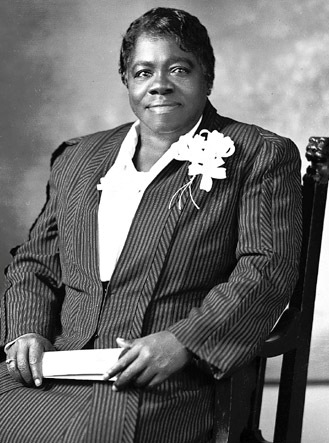
American educator, philanthropist, humanitarian, womanist, and civil rights leader Mary McLeod Bethune (“ McLeod; July 10, 1875–May 18, 1955). After founding the National Council of Negro Women in 1935, Bethune went on to start the organization’s flagship publication, the Aframerican Women’s Journal. She oversaw the National Association for Colored Women and other African-American women’s groups. President Franklin D. Roosevelt nominated Bethune secretary of the National Youth Association (NYA), making her the first Black woman to head a federal organization.
She founded an African-American private school that subsequently evolved into Bethune-Cookman University. She was the only female African American member of the US delegation that drafted the United Nations charter. Additionally, McLeod served as a leader for Alice Throckmorton McLean’s American Women’s Voluntary Services. From 1924 until 1955, Bethune was a prolific writer who published in a number of magazines.
Following her involvement in Franklin D. Roosevelt’s 1932 presidential campaign, she was named a national counselor and collaborated with Roosevelt to establish the Federal Council on Colored Affairs, sometimes referred to as the Black Cabinet. Her Daytona Beach home was named a National Historic Landmark, and a memorial honoring her was erected in 1974 as “the first monument to honor an African American and a woman in a public park in Washington, D.C.”
Mary McLeod Bethune Christian Biography
Early Life
On July 10, 1875, Mary Jane McLeod was born in a small log cabin on a Sumter County rice and cotton farm close to Mayesville, South Carolina. She was the fifteenth of seventeen children born to former slaves Sam and Patsy McIntosh McLeod. After being freed, Patsy McLeod worked for her previous master and made enough money to purchase five acres from him. The log cottage where McLeod was born was constructed there by Sam and his sons. Growing up, McLeod heard tales from her maternal grandmother, Sophie, about fighting against slavery. Both Patsy and Sophie assured McLeod that she was unique. McLeod acknowledged that both of them motivated her efforts to promote equality.
As a child, McLeod remembered experiencing racial inequality, noting that the Black population had less access to opportunities and material prosperity. She specifically recalled going to the Wilsons’ house, the family that had enslaved her mother, and exploring a playhouse while Patsy was at work. One of the Wilson girls chastised McLeod for picking up a book, saying, “Put down that book, you can’t read.” McLeod subsequently stated that the experience fueled her ambition for education and literacy.
McLeod witnessed a white mob attack and almost hang a Black man when she was twelve years old. The man had pushed a white man to the ground after refusing to blow out a match for him. McLeod witnessed the crowd almost hang the Black guy, but the sheriff intervened at the last second. Later on, McLeod remembered learning about the horrifying consequences of white aggression as well as the importance of forming alliances with certain white people, whom she referred to as “calm men of authority.”
Mary McLeod Bethune started attending Trinity Mission School, a one-room Black schoolhouse in Mayesville founded by Emma Jane Wilson and administered by the Presbyterian Board of Missions to Freedmen, in October 1886. She walked from her house to the school, which was five miles away. She taught her family what she had learnt every day because not all of her siblings went. Wilson not only founded the school but also served as McLeod’s instructor and mentor.
Wilson was a student at Barber-Scotia College, formerly known as Scotia Seminary. From 1888 to 1894, McLeod attended the same school thanks to her scholarship. From 1894 to 1895, she studied at Dwight L. Moody’s Institute for Home and Foreign Missions in Chicago, which is now known as the Moody Bible Institute. With the intention of serving as a missionary in Africa, McLeod submitted an application to the Presbyterian Board of Missions. McLeod found a new application for the abilities she had acquired by teaching at Haines Institute in Augusta, Georgia, even though her request was turned down.
Marriage & Family
In 1898, McLeod wed Albertus Bethune. Before relocating to Florida, the Bethunes lived in Savannah, Georgia, where she worked as a social worker. Coyden Harold Uggams, a visiting Presbyterian preacher, convinced the couple to move to Palatka, Florida, to establish a mission school. They had a son named Albert McLeod Bethune, Sr. After the Bethunes relocated in 1899, Mary oversaw the mission school and started reaching out to inmates. In 1907, Albertus moved to South Carolina and left the family. Albertus passed away from TB in 1918, but the couple never got divorced.
Black Women Educators in History
For a brief while, Bethune taught at her previous Sumter County school. She started teaching at Augusta, Georgia’s Haines Normal and Industrial Institute in 1896. The school was a part of a Presbyterian mission run by churches in the north. Lucy Craft Laney, a Christian missionary and the daughter of former slaves, founded and oversaw it. With a Christian missionary fervor, Laney oversaw her school, placing a strong emphasis on character and practical instruction for both boys and girls who were ready to study. Laney’s goal was to equip her students for the demands of life by instilling in them a Christian moral education. Regarding her time at Laney’s school, Bethune stated:
I was so impressed with her fearlessness, her amazing touch in every respect, an energy that seemed inexhaustible and her mighty power to command respect and admiration from her students and all who knew her. She handled her domain with the art of a master.
Many of Laney’s educational ideas, such as her emphasis on teaching women and girls to better the lot of Black people, were embraced by Bethune; however, Bethune’s strategy added a focus on political activism. Bethune met her husband at the Kindell Institute in Sumter, South Carolina, after being sent by the Presbyterian mission after a year at Haines.
School in Daytona
Bethune was resolved to open a school for females after getting married and relocating to Florida. Bethune relocated from Palatka to Daytona because it offered greater economic opportunities, was a well-liked tourist destination, and had flourishing enterprises. She paid $11.00 a month to rent a tiny house in October 1904. She used abandoned boxes to construct desks and benches, and she obtained additional materials through charitable donations. In 1904, Bethune founded the Educational and Industrial Training School for Negro Girls. At first, she had six pupils: her son Albert and five girls. The cost of tuition was fifty cents at this point.
Daytona’s dump was next to the school. She collected money to buy more dump land by selling ice cream and homemade sweet potato pies to groups of local laborers. She paid some of the laborers she employed to construct Faith Hall’s brick structure with free tuition. Faith Hall, a two-story building, and an auditorium were finished by 1918. Later, in order to educate boys who attended the school, McLeod had another building built off campus.
When her school first started, the students used burned wood to make pencils and elderberry juice to make pen ink. They also requested furniture from nearby companies. “I thought of cash money as the smallest part of my resources,” Bethune later wrote. I wanted to help others and had trust in a caring God. Black churches in the area donated funds, supplies, and labor to the school. In less than a year, Bethune was instructing over thirty girls at the institution. 250 girls were enrolled after two years of operation.
Additionally, Bethune courted affluent White groups like the Palmetto Club for women. James Gamble of Procter & Gamble, Ransom Eli Olds of Oldsmobile and REO Motor Company, and Thomas H. White of White Sewing Machines were among the powerful white individuals she recruited to serve on her school’s board of trustees. When Booker T. Washington of the Tuskegee Institute paid her a visit in 1912, he gave her some advice on how to secure financing from White patrons.
The girls had to get up at 5:30 a.m. for Bible study due to the demanding curriculum. A life of self-sufficiency was emphasized in some of their lessons, which included home economics and industrial skills like dressmaking, millinery, cooking, and other crafts. At 9 p.m., students’ days came to a close. Science and business classes were soon added by Bethune, followed by math, English, and foreign languages at the high school level. In order to maintain her school, Bethune was constantly looking for funding. To win over affluent white philanthropists, she would offer them seats on the board. Bethune also raised money by using her baking abilities. She was able to establish connections thanks to her acquaintance with Franklin and Eleanor Roosevelt. John D. Rockefeller was one of Bethune’s more giving contributors, reportedly contributing $62,000.
Impact on Daytona Beach community
There was no hospital in Daytona Beach in the early 1900s that would accept persons of color regardless of their circumstances. After one of her students developed appendicitis and was first turned down for treatment at the nearby hospital, Bethune got the idea to open a hospital. After persuading the physicians to treat her student, Bethune left with the intention of starting a hospital.
She discovered a cabin close to the school and paid $5,000 for it with the assistance of supporters. In 1911, Bethune established the first Black hospital in Daytona Beach, which she named McLeod Hospital in honor of her parents. In a matter of years, it had grown from two beds to twenty. In addition to Bethune’s student nurses, the hospital employed both White and Black doctors. Over the course of its 20 years of operation, this hospital saved several Black lives.
Black and white residents of the town depended on McLeod Hospital for assistance during that period. Black workers were admitted to the hospital following an explosion at a neighboring construction site. The hospital’s and its nurses’ efforts during the 1918 influenza outbreak were also commended. The hospital was so busy during this outbreak that it had to overflow into the auditorium of the school. Halifax, Daytona’s public hospital, consented to establish a separate hospital for persons of color in 1931. It wasn’t until the 1960s that Black people would fully integrate into the main location of the public hospital.
When Bethune opened the Daytona School library to the public, it became the first free library in Florida that Black Floridians could use. She organized a boys’ club and held a weekly story hour that drew hundreds of kids throughout the county.
Black people don’t have enough affordable housing, thus Bethune used her position as president to advocate for better housing availability. She became the only Black member of the city’s housing board when she was appointed, and she was successful in getting a public housing complex constructed close to the campus of her school.
Career as a public leader
Suffrage activism
In 1912, Mary McLeod Bethune became a member of the Equal Suffrage League, a division of the National Association of Colored Women. Despite not being able to vote at the time, she was adamant about changing that for people in her community and was an advocate for voting equality. Bethune persisted in her efforts to assist Black people in gaining access to the polls following the ratification of the 19th Amendment, which established women’s suffrage. She asked for donations to assist Black voters in paying poll taxes, which were designed to discriminate against Black Americans and required voters to pay a fee in order to cast a ballot. Additionally, she offered tutoring for literacy tests related to voter registration, which is another discriminatory practice that restricts the voting rights of Black Americans. This happened at Daytona Normal and Industrial Institute, her school. Lastly, she organized and carried out large-scale voter registration campaigns.
National Youth Administration
Roosevelt’s Works Progress Administration (WPA) established the National Youth Administration (NYA), a federal organization. It offered initiatives designed especially to support youth employment and relief. It concentrated on residents without jobs who were not enrolled in school between the ages of sixteen and twenty-five. Bethune successfully and vigorously advocated for minority participation within the organization, and in 1936 she was hired as an assistant on a full-time basis.
Two years later, Bethune was named Director of the Division of Negro Affairs, making history as the first female African-American division head. She oversaw NYA funding for school-based initiatives that assist Black children. As a financial manager, she was the only Black NYA agent. Some of the first Black pilots were graduates of the Civilian Pilot Training Program, which she made sure Black universities participated in. In 1939, the NYA’s director declared, “No one can do what Mrs. Bethune can do.”
Bethune’s perseverance made it clear to national authorities that Black youth employment needs to be improved. In its final report, published in 1943, the NYA said,
more than 300,000 black young men and women were given employment and work training on NYA projects. These projects opened to these youth, training opportunities and enabled the majority of them to qualify for jobs heretofore closed to them.
Bethune promoted the nomination of Black NYA officials to positions of political authority within the administration. Bethune’s administrative assistants acted as intermediaries between the state and local NYA administrations and the National Division of Negro Affairs. The large number of administrative assistants made up Bethune’s workforce. They assisted Black individuals nationwide in obtaining better employment and pay possibilities.
During her time there, Bethune also advocated for the approval of a foundation for Black children with disabilities and a consumer education program for Blacks. She intended to study for Black Workers’ Education Councils. Due to insufficient finance and concerns about replicating the work of non-governmental, private organizations, national officials did not promote these. In 1943, the NYA was disbanded.
Death and Accolades
Mary McLeod Bethune passed away after a heart attack on May 18, 1955. Editorial tributes to her were published in African-American publications around the country after her passing. She was described as “Exhibit No. 1 for all who have faith in America and the democratic process” by the Oklahoma City Black Dispatch. Her life was described by the Atlanta Daily World as “One of the most dramatic careers ever enacted at any time upon the stage of human activity.” Additionally, the Pittsburgh Courier stated: “In any race or nation she would have been an outstanding personality and made a noteworthy contribution because her chief attribute was her indomitable soul.”
She was also commended by the mainstream media. “The story of her life should be taught to every school child for generations to come,” according to Christian Century. She was described by the New York Times as “one of the most potent factors in the growth of interracial goodwill in America.” The Washington Post reported: “So great were her dynamism and force that it was almost impossible to resist her … Not only her own people, but all America has been enriched and ennobled by her courageous, ebullient spirit.” The Daytona Beach Evening News, her hometown newspaper, wrote, “To some, she seemed unreal, something that could not be. … What right had she to greatness? … The lesson of Mrs. Bethune’s life is that genius knows no racial barriers.” On the Bethune-Cookman University campus in Daytona Beach, Florida, McLeod Bethune is interred.
Personal Life
Mary McLeod Bethune claimed that her cane provided her “swank” and was used for effect rather than mobility help. She advocated temperance for African Americans and abstained from alcohol, publicly reprimanding Black people who were drunk. Daytona’s teachers and pupils, according to Bethune, were her first family. She was frequently referred to as “Mother Bethune” by her students.
She was renowned for accomplishing her objectives. “She had the most marvelous gift of effecting feminine helplessness in order to attain her aims with masculine ruthlessness,” remarked Robert Weaver, another member of Roosevelt’s Black Cabinet. Bethune attempted to turn a White Daytona resident into an ally after he threatened her students with a firearm. According to the director of the McLeod Hospital, “Mrs. Bethune treated him with courtesy and developed such goodwill in him that we found him protecting the children and going so far as to say, ‘If anybody bothers old Mary, I will protect her with my life.'”
Throughout her life, she placed a high value on independence. Mary McLeod Bethune made investments in a number of organizations, including numerous life insurance firms and the Pittsburgh Courier, a Black newspaper. She later retired in Florida after founding Central Life Insurance Company of Florida. Black people were prohibited from going to the beach because of state segregation. In response, Bethune and a number of other entrepreneurs invested in and bought Paradise Beach, a 2-mile (3.2-kilometer) length of beach and the nearby properties, which they subsequently sold to Black families. White families were also permitted to visit the waterfront. In her honor, Paradise Beach was eventually renamed Bethune-Volusia Beach. She owned a quarter of the Daytona Welricha Motel.
Legacy and Honors
Journalist Ida Tarbell ranked Bethune as the tenth greatest woman in America in 1930. In 1935, the NAACP presented Bethune with the Spingarn Medal.
Along with Walter White and W. E. B. Du Bois, Bethune represented the NAACP at the 1945 United Nations foundation in San Francisco, where she was the only Black woman present. She was the first female recipient of Haiti’s highest honor, the National Order of Honour and Merit, in 1949. In 1949, she represented the United States at Liberia’s re-inauguration of President William V. S. Tubman.
Additionally, she advised five US presidents. She was appointed to a number of government posts by Calvin Coolidge and Franklin D. Roosevelt, including chair of the Federal Council of Negro Affairs, director of the National Youth Administration’s Division of Negro Affairs, and Special Advisor in Minority Affairs. One of her accomplishments was serving as the Women’s Army Corps assistant director. She was also an honorary member of Iota Phi Lambda Sorority, Inc. and Delta Sigma Theta sorority.
Bethune was admitted into the National Women’s Hall of Fame in 1973. The Mary McLeod Bethune Memorial, created by artist Robert Berks, was placed in Lincoln Park (Washington, D.C.) on July 10, 1974, the anniversary of her 99th birthday. It was the first monument in a public park in the District of Columbia to recognize a woman or an African American. The pedestal bears the inscription “let her works praise her” (a reference to Proverbs 31:31), while the side is inscribed with headers from her “Last Will and Testament”:
I leave you to love. I leave you to hope. I leave you the challenge of developing confidence in one another. I leave you a thirst for education. I leave you a respect for the uses of power. I leave you faith. I leave you racial dignity. I leave you a desire to live harmoniously with your fellow men. I leave you, finally, a responsibility to our young people.